StylesBot AI-Powered SaaS

0 → 1: Designed, Engineered, and Launched.

Cross-functional teams often struggle with fragmented handoffs, scattered style guides, and overlooked accessibility. Without a centralized ‘source of truth’ for Ul tokens and WAG compliance, teams face increased overhead, version conflicts, and inconsistent brand execution across platforms.

The Goal

The goal was to build an Al-powered platform that bridges the gap between creative vision and production code. By centralizing the workflow, the platform helps designers, developers, and agencies drastically reduce handoff time while ensuring brand consistency across web and mobile products.
Planning, Concept & Key Insights

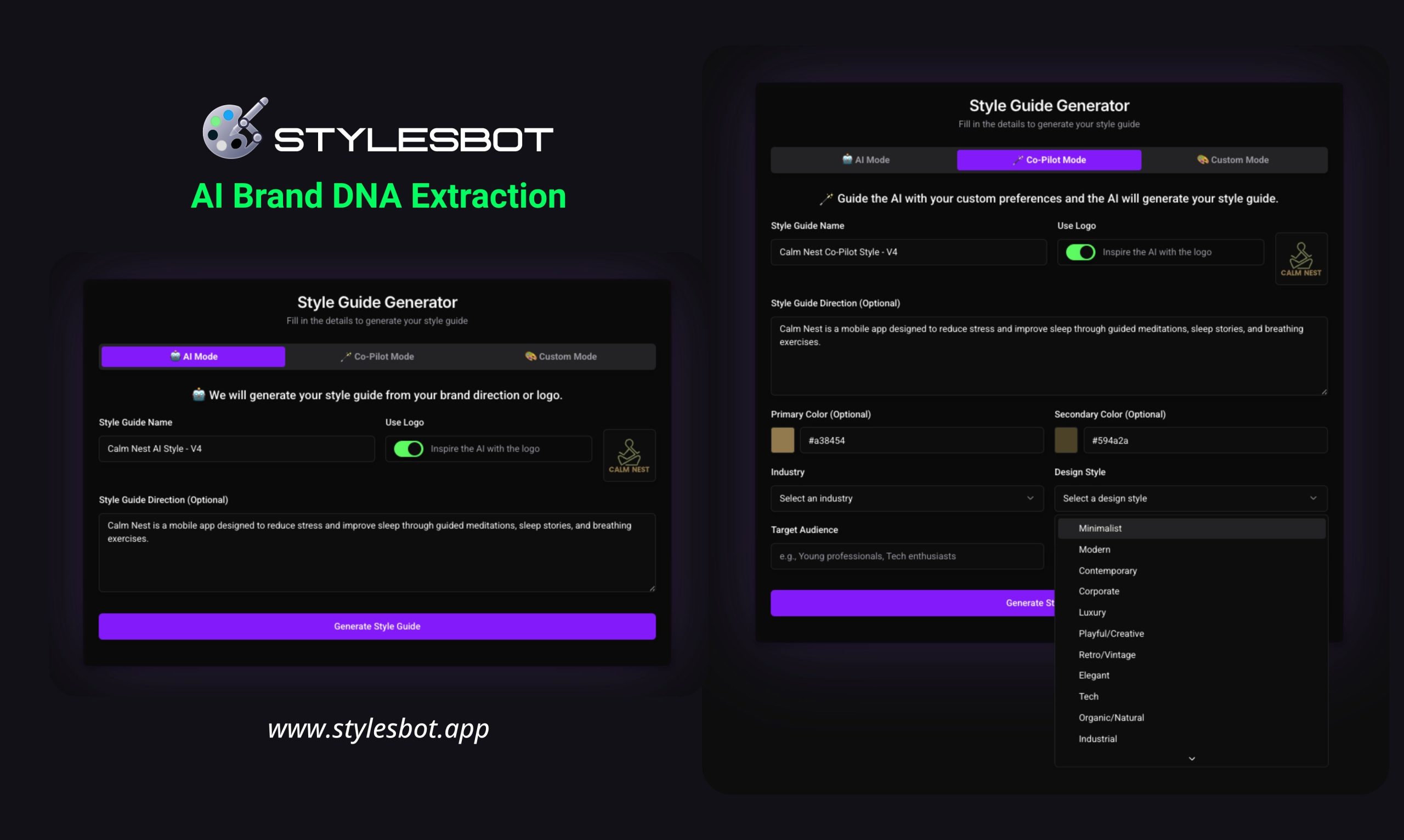
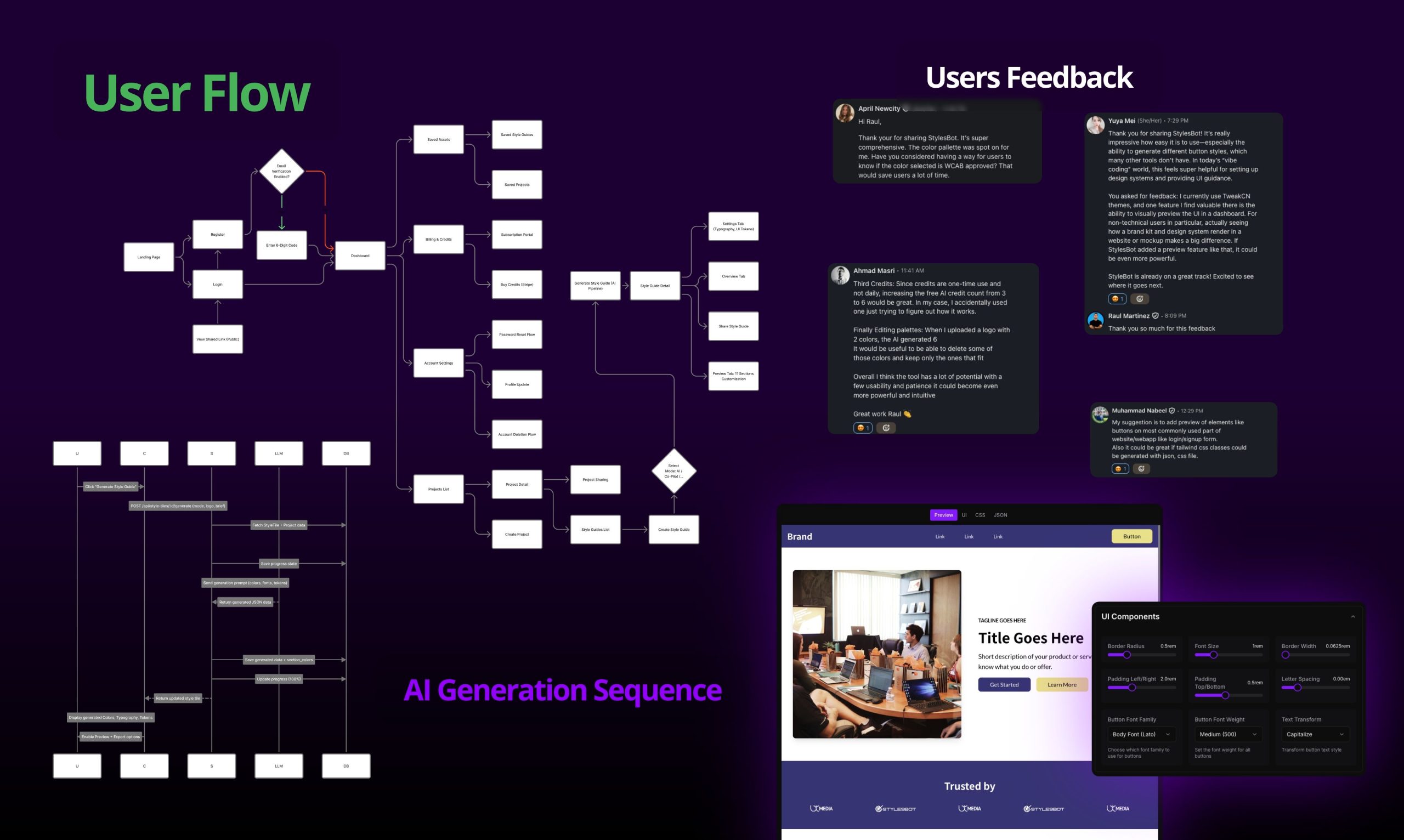
After interviewing product designers, developers, and PMs, I validated the need for a faster, more consistent way to create style guides. The idea came from a recurring problem I saw across teams: rebuilding style tiles and tokens from scratch for every project. I set out to create an AI-powered platform that could generate complete, WCAG-checked style guides in under two minutes from a logo or short brief. During planning, I mapped user journeys, defined the UX architecture, and outlined flexible generation modes: AI, Co-Pilot, and Custom.

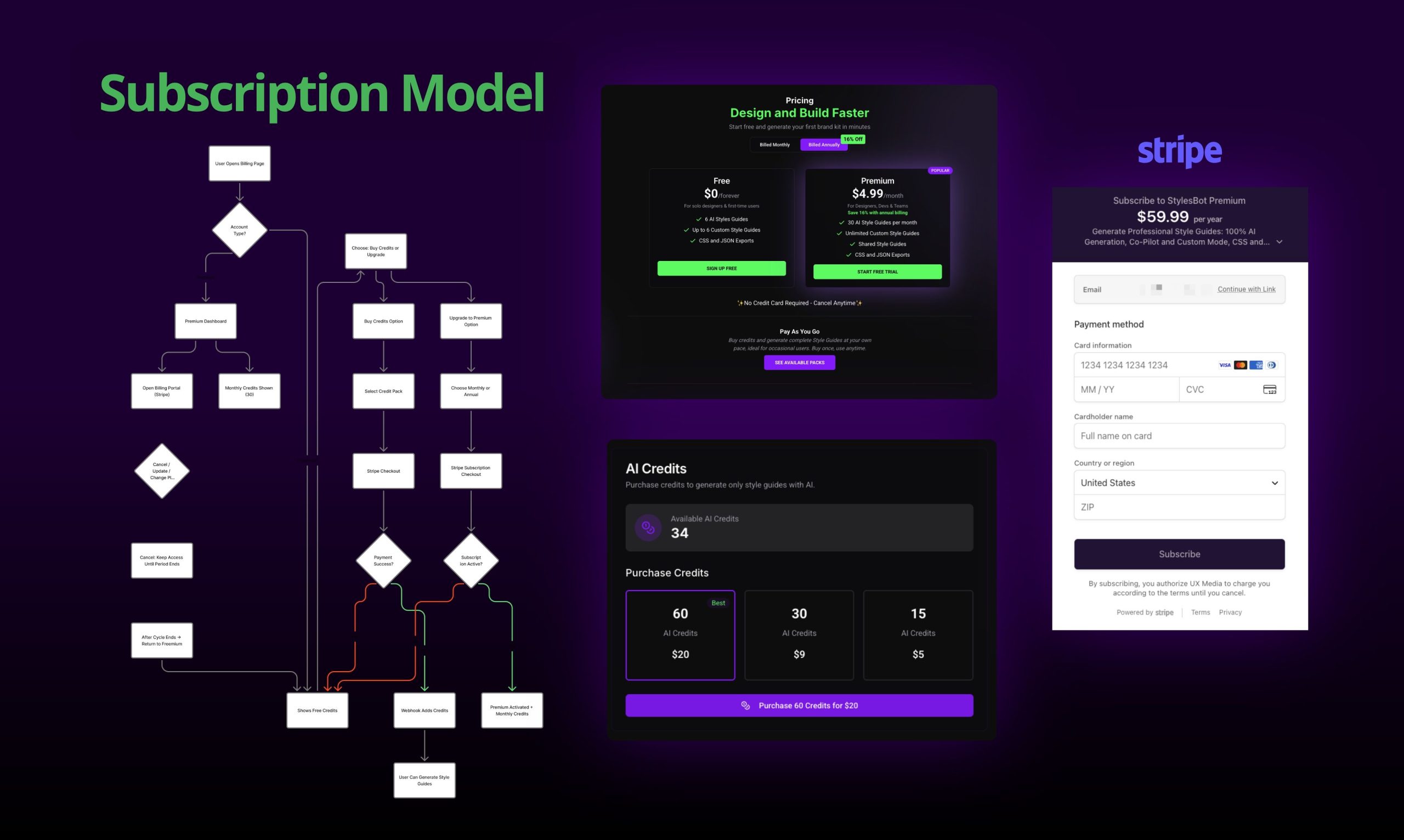
Subscription Model Design

I evaluated operational costs to support a true freemium model. Users can create an account without adding a credit card and generate up to 6 Al-powered style guides for free. From there, they have the flexibility to upgrade to a monthly or annual subscription, or purchase credit bundles instead.

This structure allows users to test the product without friction, decide if it’s the right fit, and choose a plan that matches their workflow. For the business, it creates a steady stream of insights from real usage, helping refine the product and optimize conversion over time.

System Architecture & Tech Stack

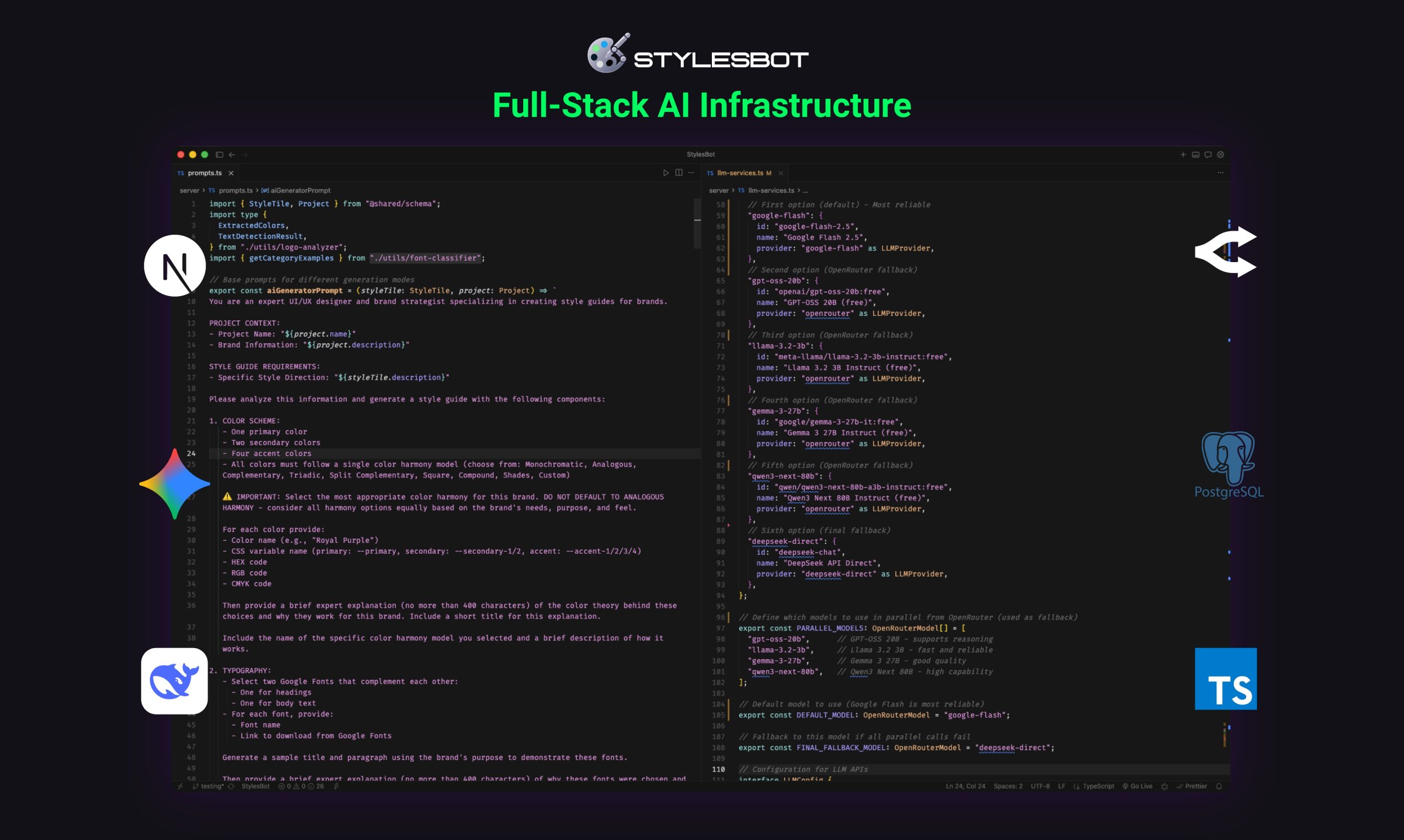
Once the roadmap was validated with early users, I moved quickly from prototype to production. I used Replit AI for rapid experimentation, then rebuilt the platform with GitHub and Cursor to gain full control over the architecture and tech stack, including Next.js, PostgreSQL, Google Gemini Flash 2.5 as the primary LLM, and OpenRouter fallback models.

Designing AI-Guided Brand Generation

I designed the experience and generation flow that transforms a logo or prompt into a structured style guide. The interface gives users guided control while the AI translates their input into usable design decisions.

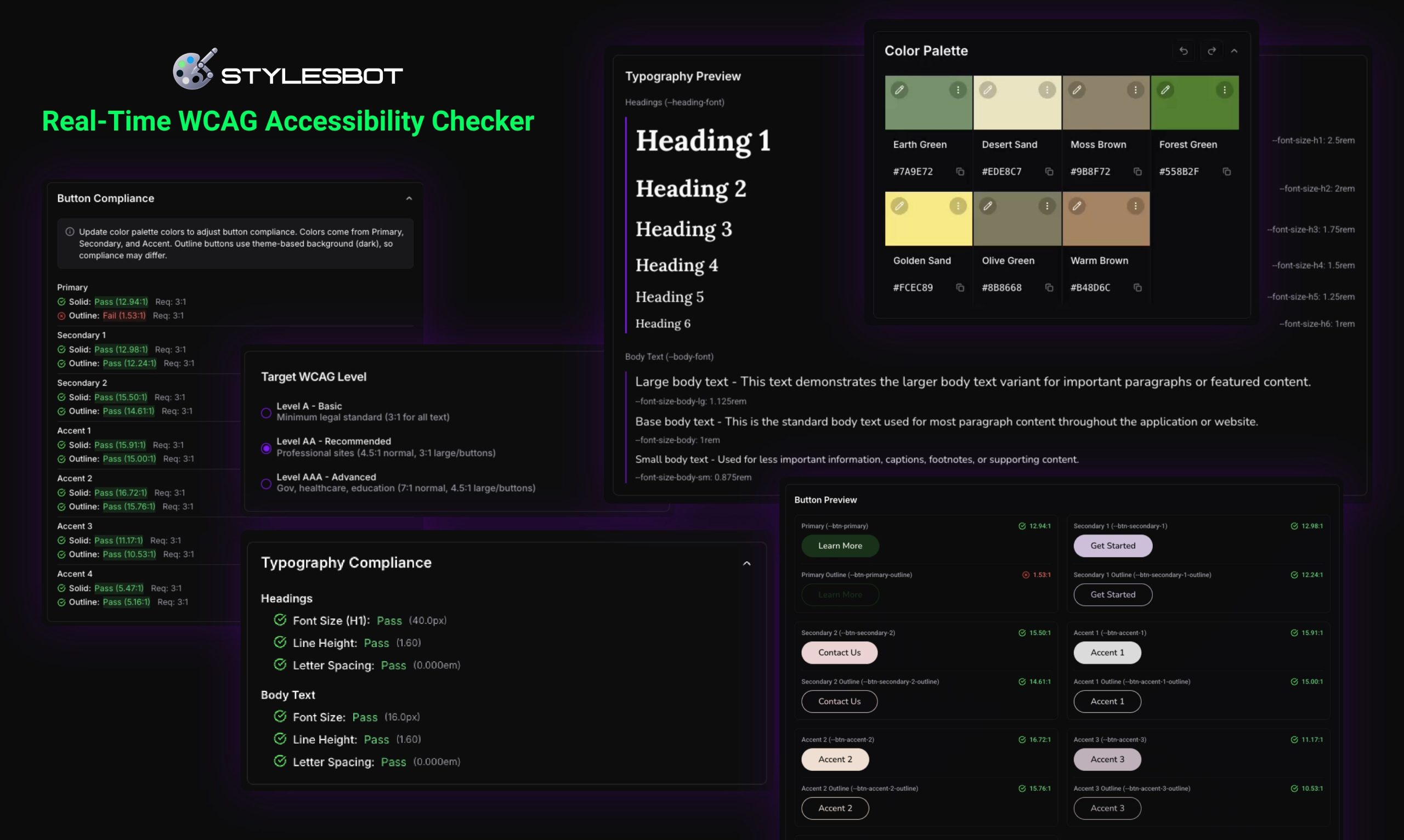
Engineering Accessibility into the Workflow

I built real-time WCAG validation into the platform so accessibility feedback appears during generation, not after handoff. This helped turn accessibility from a manual audit into a built-in product feature.

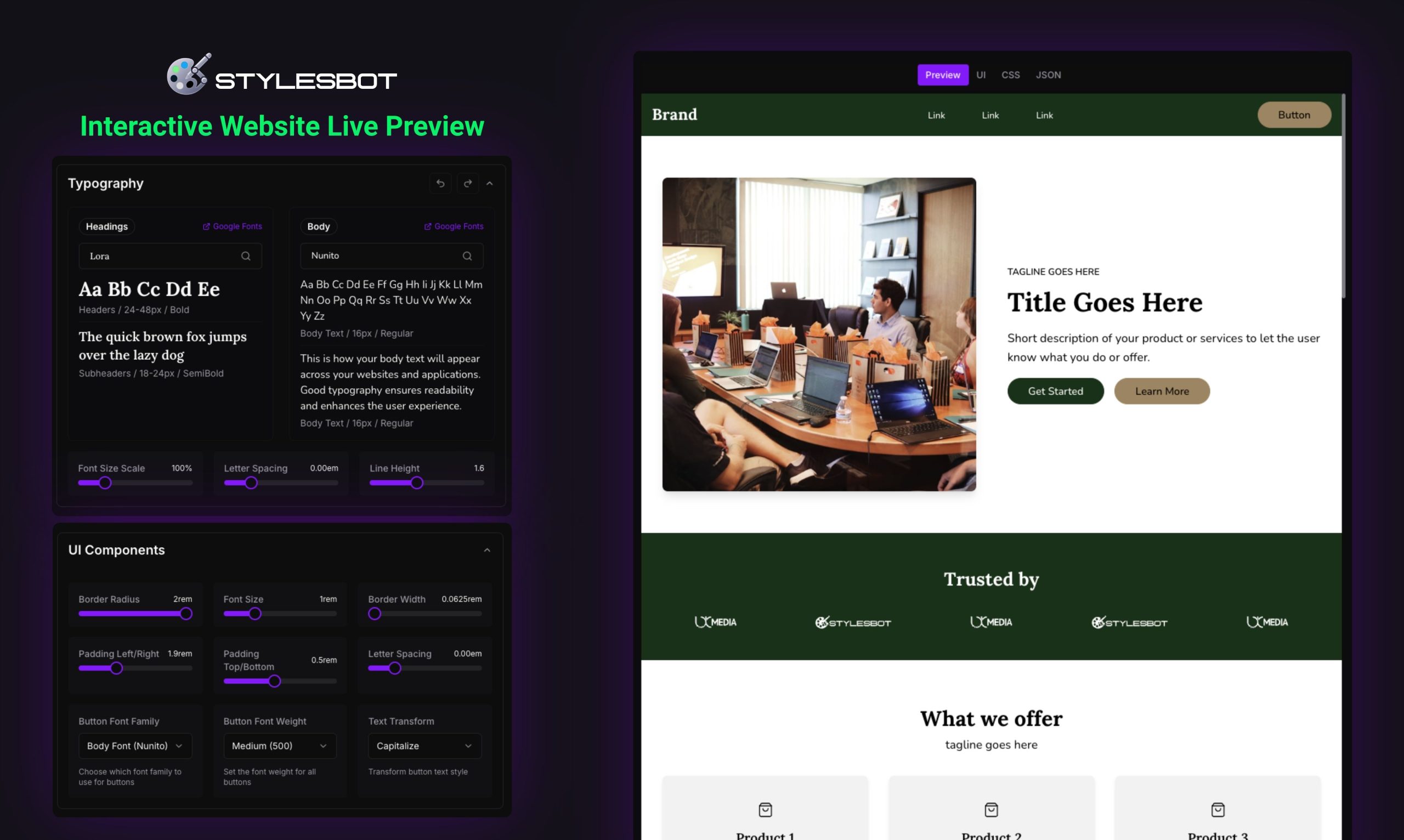
Designing with a Live System Preview

I built an interactive preview that applies generated colors, typography, and UI settings to a realistic website layout in real time. This helped users understand the system faster and make better design decisions with immediate visual feedback.

Product Experience Beyond the App

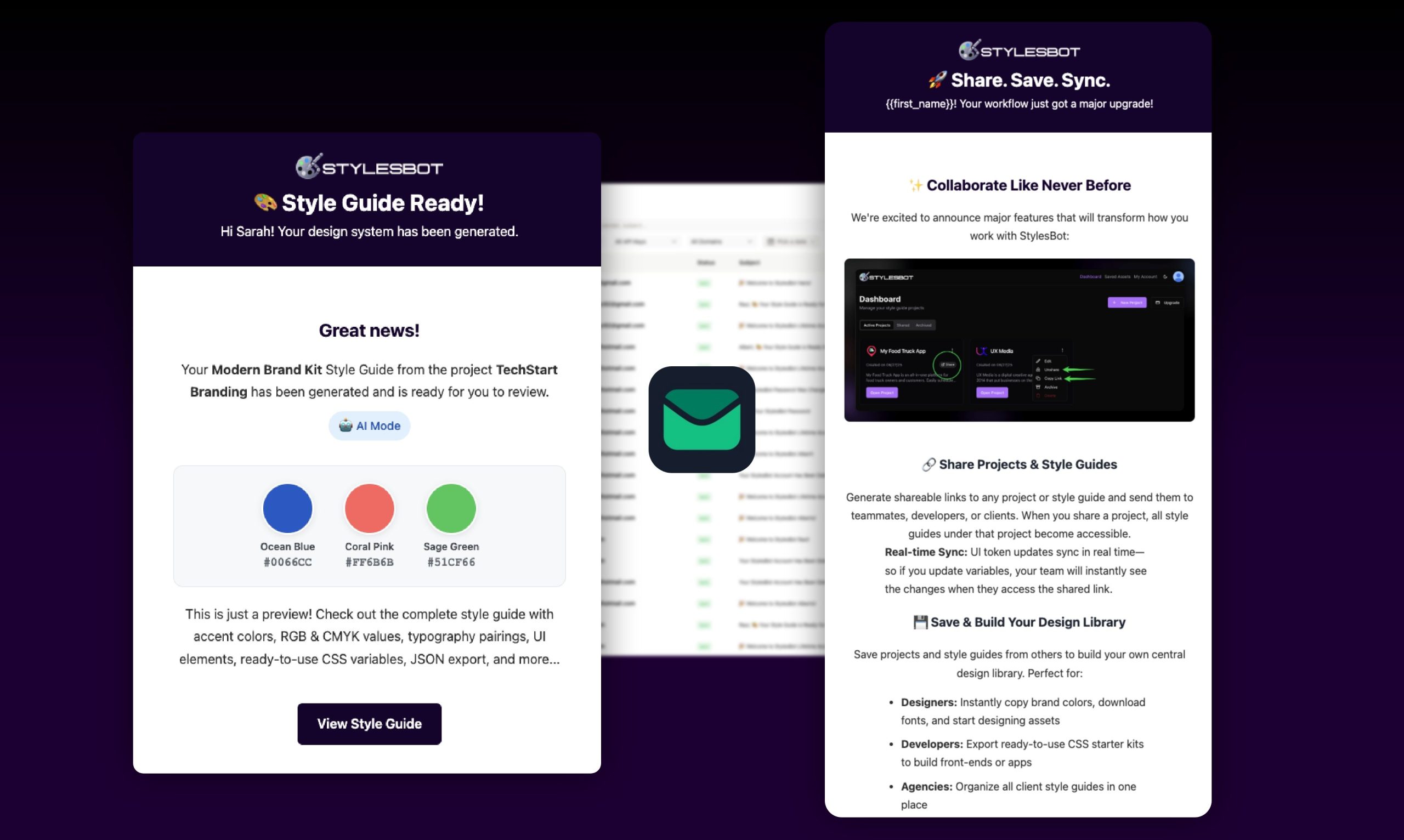
I integrated transactional and announcement emails directly into the user journey so the experience continues even after users leave the platform. This helped reinforce key actions, improve retention, and keep the brand experience consistent from dashboard to inbox.

The Figma Sync Plugin

Following the initial launch, user feedback identified a critical need for seamless integration with design tools such as Figma. Therefore, I developed a dedicated Figma Plugin rather than a simple API connection to handle the complexities of professional design systems. Connecting directly to the StylesBot architecture, the plugin automatically translates JSON tokens into native Figma Variables and creates structured collections for colors, text styles, and UI tokens.

Promoted via an automated email campaign, this native sync quickly became the platform’s highest driver of user retention.

Ongoing Impact and Results

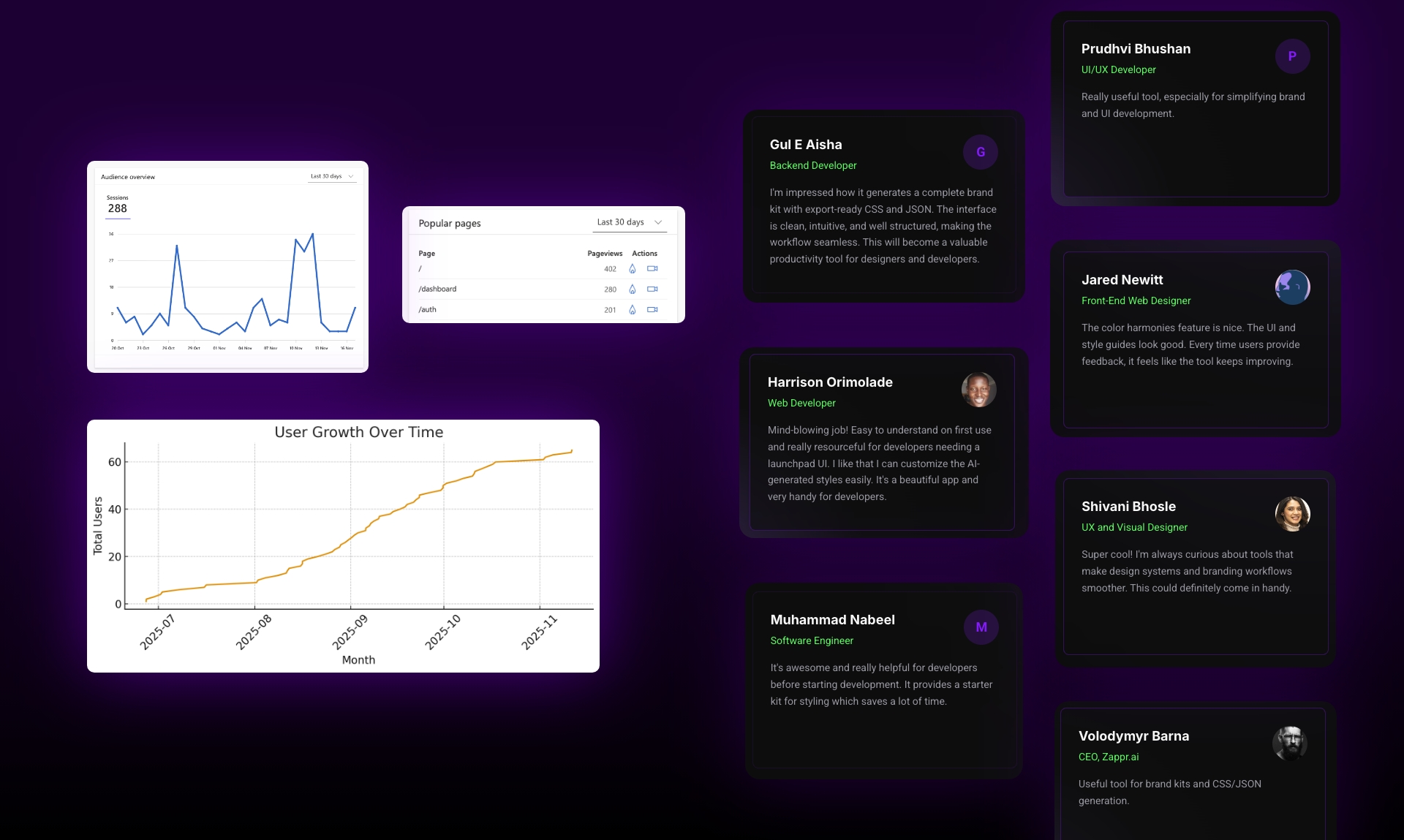
StylesBot transformed manual style guide creation into a fast, AI-powered workflow. By centralizing assets and simplifying design-to-code handoff, the platform achieved strong early traction.

Organic Users Since Launch
0 +
Satisfaction Rate
0 %
Time Saved
0 %