A complete digital transformation, end-to-end design process for Gordon Flesch Company (GFC), turning a static, feature-bloated corporate site into an intuitive, scalable, interactive and AI-driven enterprise platform.
Client:
Gordon Flesch Company
Partners:
HIVE Strategy
UX Strategy, UX Audit, Heuristic Analysis, Persona Creation, User Journey Mapping, User Flow Analysis, Information Architecture, Sitemap Redesign, Navigation Design, UI Redesign, Enterprise UX, B2B Web Design, Design Leadership, Interactive Prototypes, Design Strategy.
Challenge & Project Goal
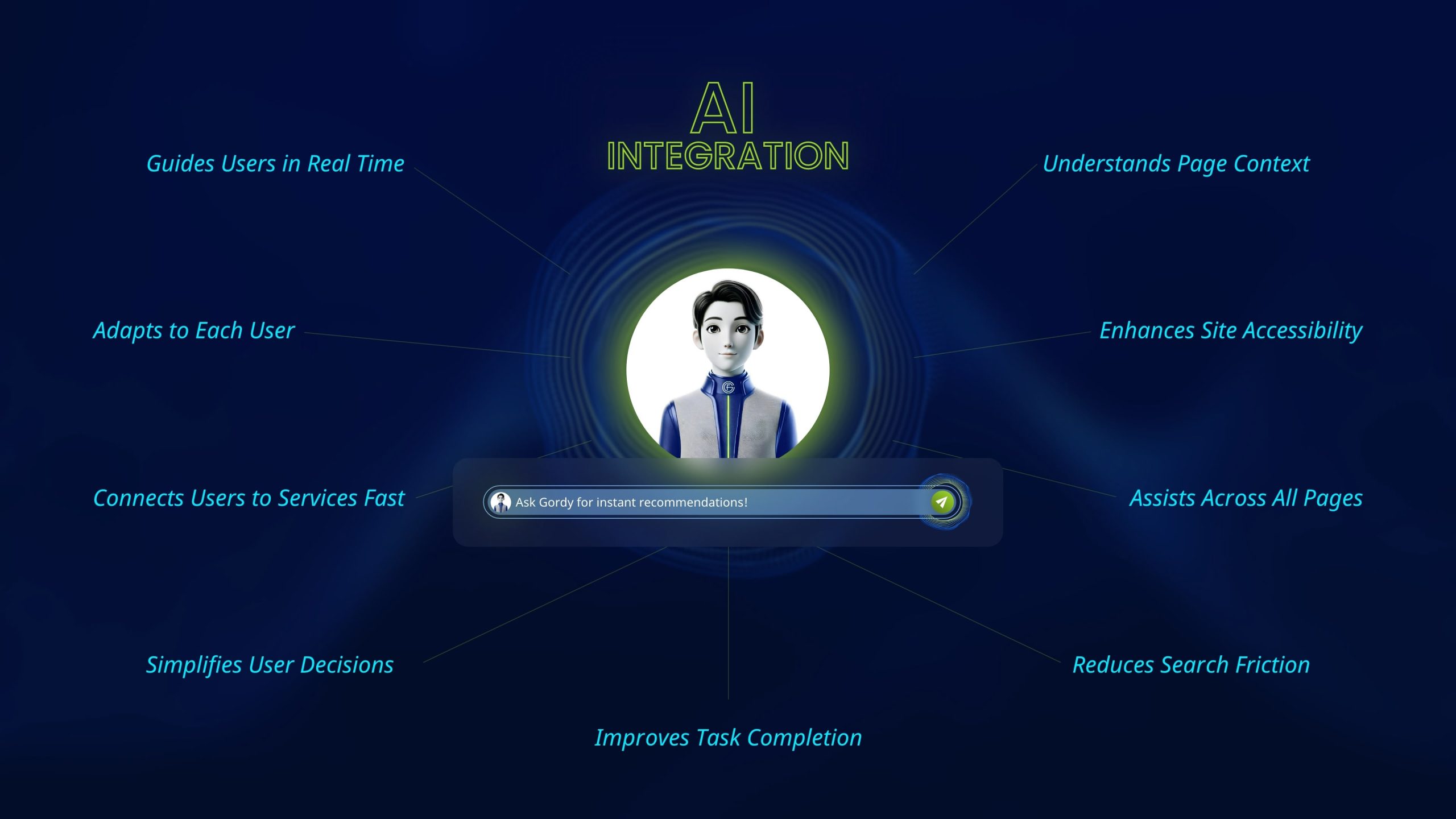
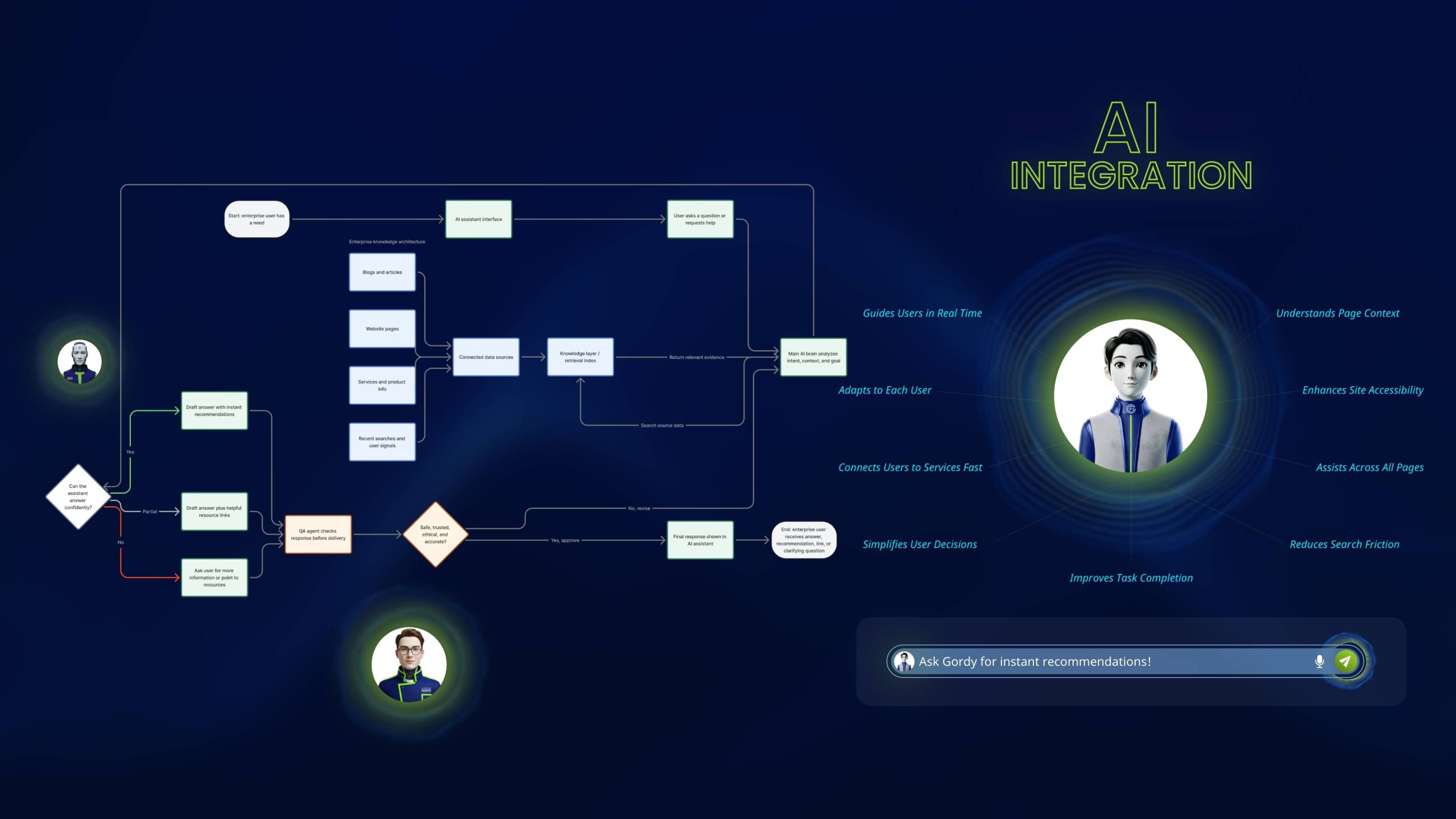
The redesign focused on improving usability and clarity across the Gordon Flesch website. The main goals were to simplify complex navigation, make it easier to distinguish between technical and service support, and introduce the “Gordy” AI assistant to enhance the overall user experience with smarter, more personalized interactions.
The redesign focused on improving usability and clarity across the Gordon Flesch website. The main goals were to simplify complex navigation, make it easier to distinguish between technical and service support, and introduce the “Gordy” AI assistant to enhance the overall user experience with smarter, more personalized interactions.
UX Research & Discovery
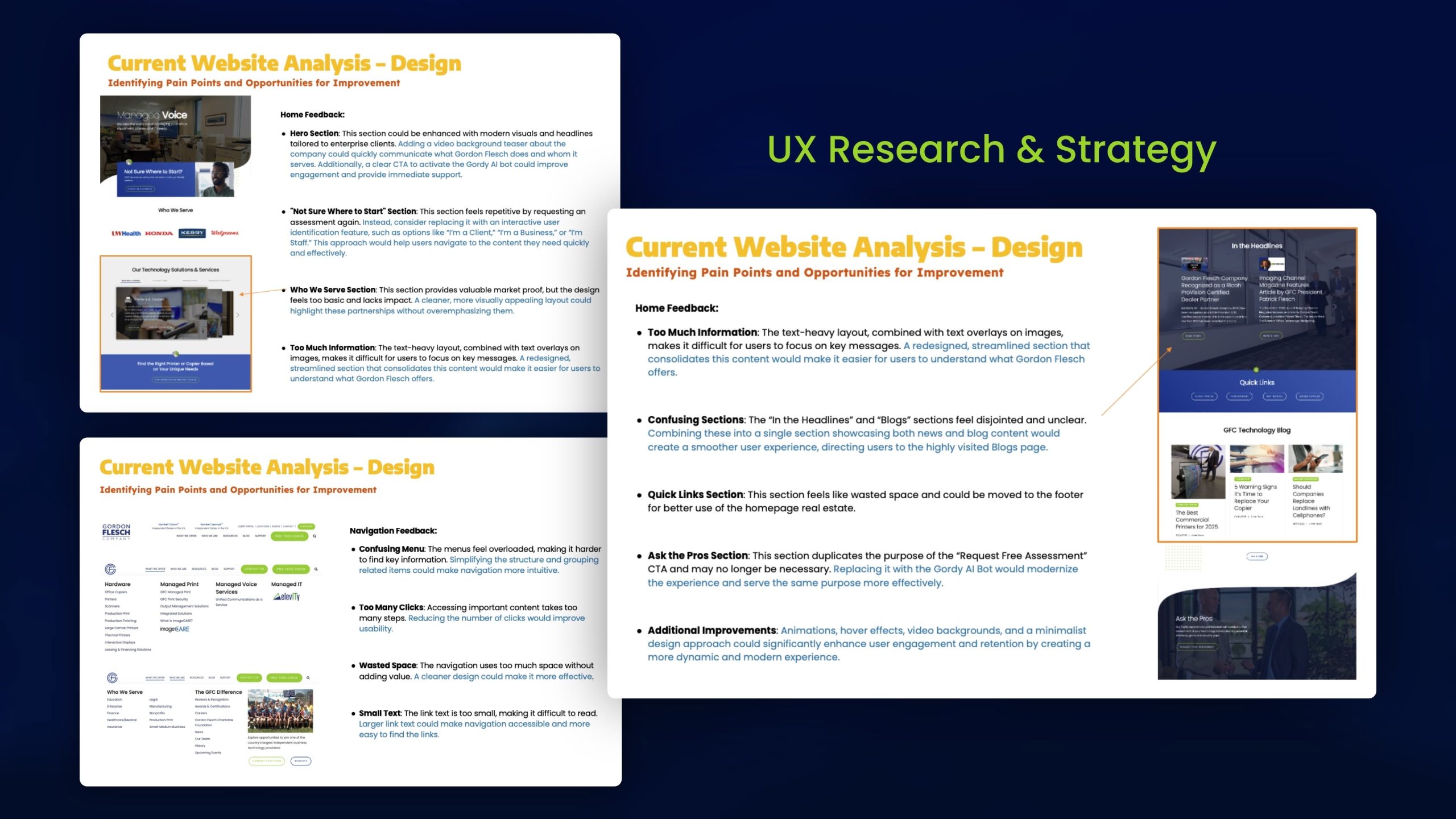
The process began with a full UX audit and heuristic analysis of the existing website. I identified key usability issues, including complex navigation paths, low-contrast CTAs, and excessive cognitive load from text-heavy layouts.
User Personas
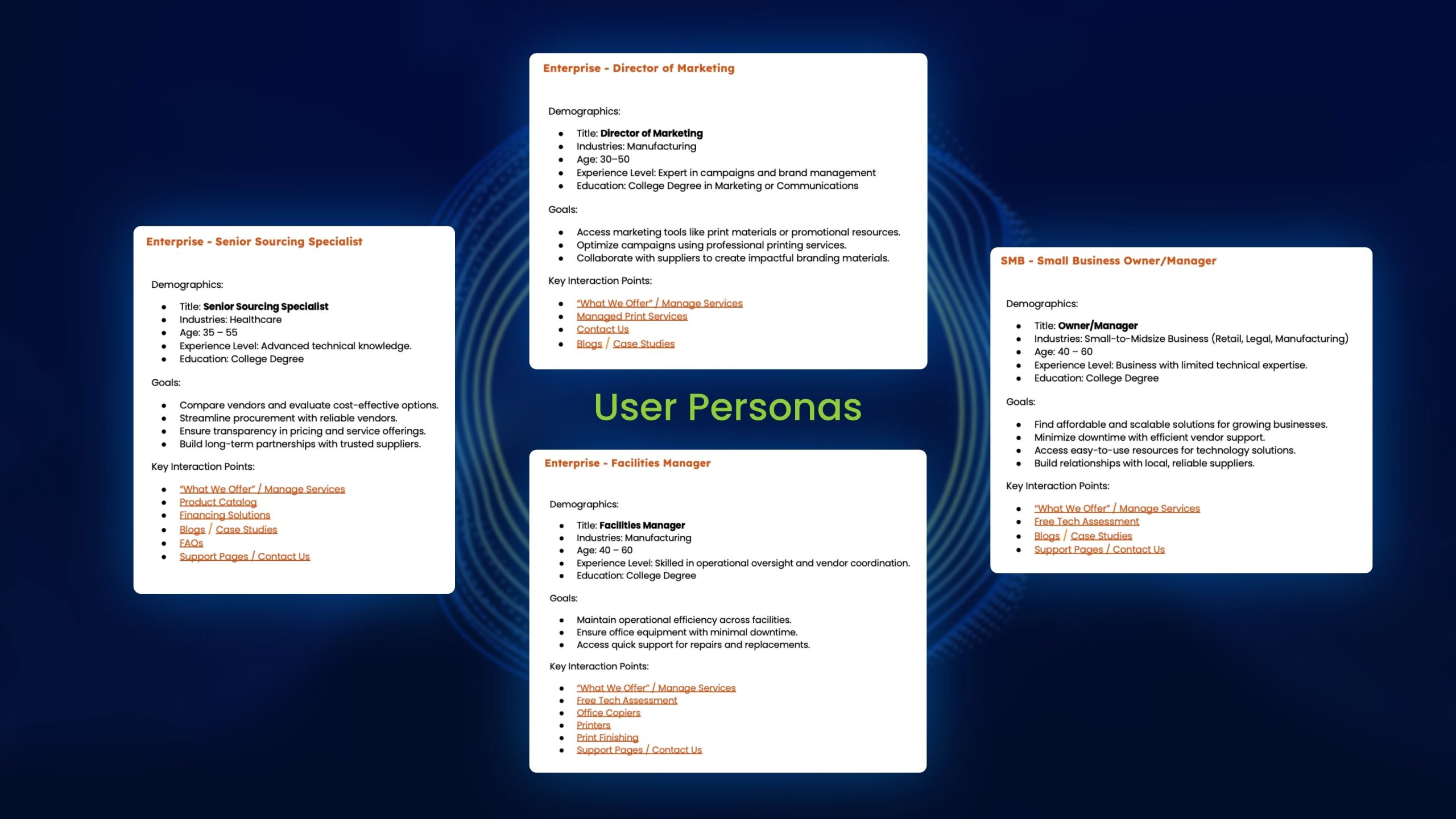
Based on this research, I created five detailed user personas representing key customer types, from enterprise IT directors to small business owners. Each persona mapped out goals, frustrations, and interaction touchpoints.
Journey Mapping
These maps visualized how each persona interacted with the current site. They exposed pain points across the discovery and decision stages, revealing confusion around navigation and mapping user emotions to guide opportunities for AI-driven support.
User Flows
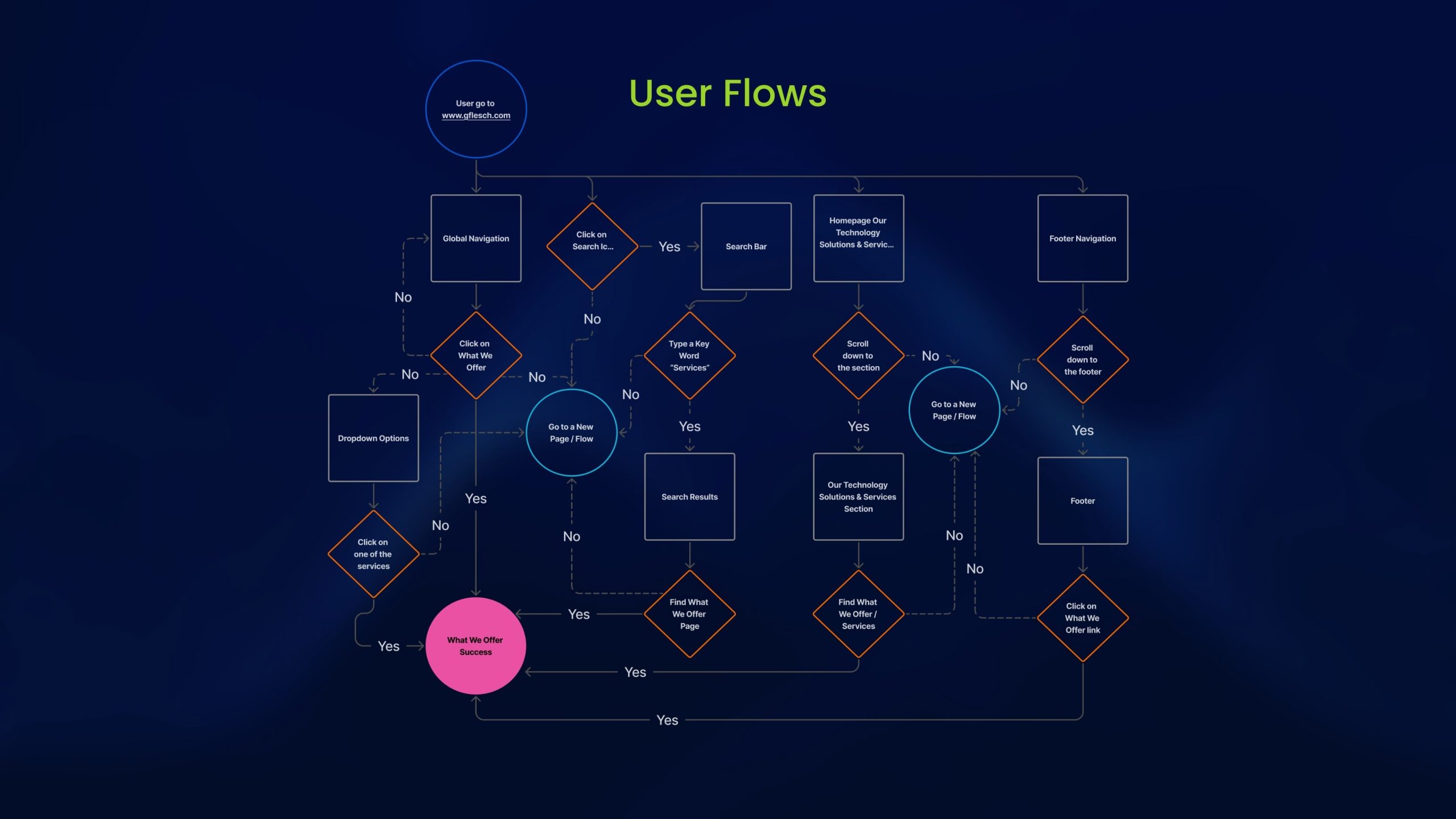
The flow analysis uncovered fragmented navigation with multiple redundant paths. By restructuring it into a single streamlined flow for critical tasks, I reduced friction and improved the time to reach critical pages, a massive win for conversion efficiency.
Site Architecture & Wireframing
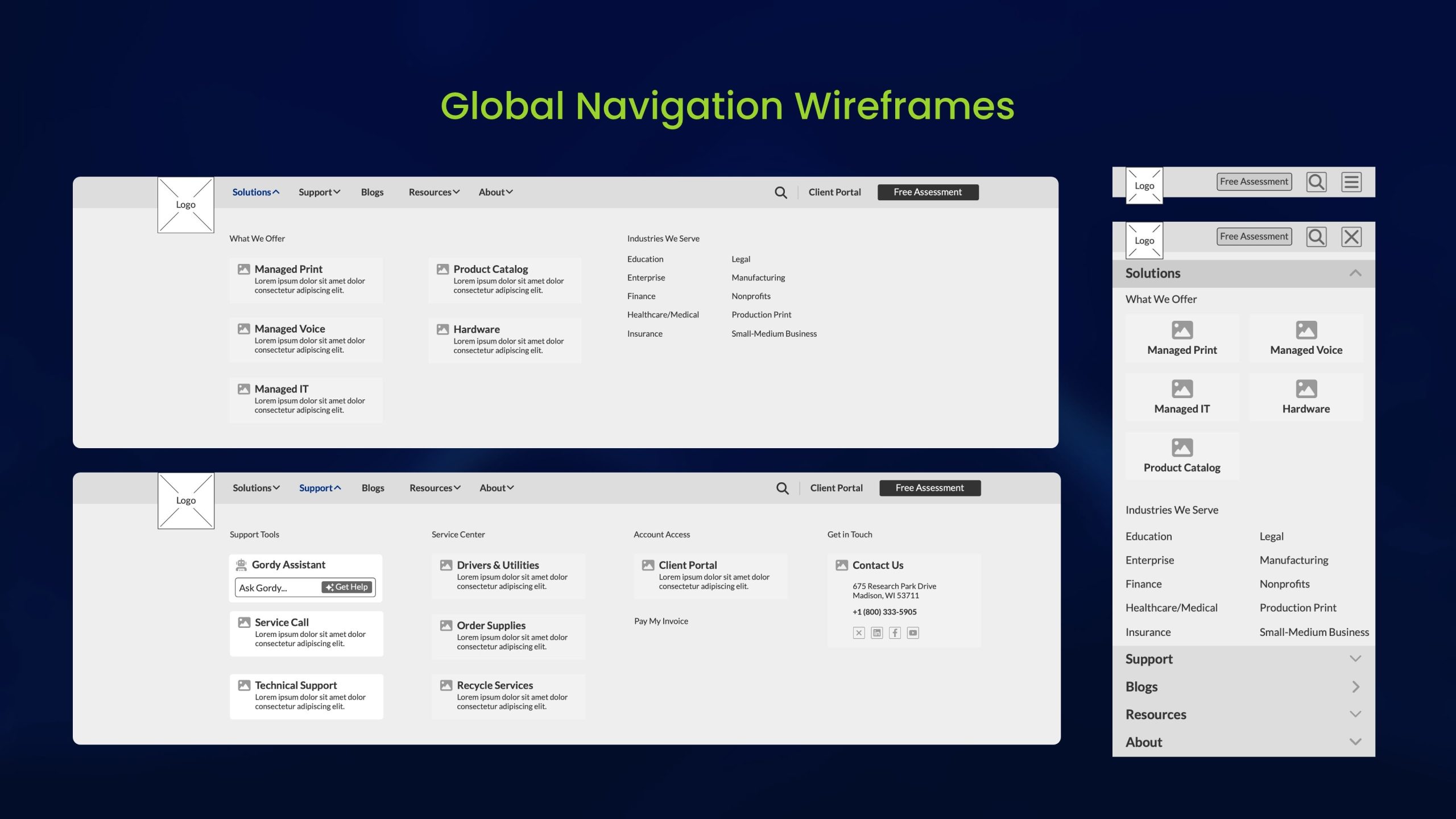
The redesigned information architecture organized content under a simplified global structure: Solutions, Support, Blog, Resources, and About. This new sitemap aligned with GFC’s 80/20 business focus, ensuring enterprise-level content appeared first.
Low Fidelity Prototype
I translated these insights into low-fidelity wireframes focused on clarity, modularity, and visual hierarchy. This phase refined the navigation experience across desktop and mobile, grouping related items and introducing predictive search to drastically reduce cognitive load.
High-Fidelity UI & Scalable Systems
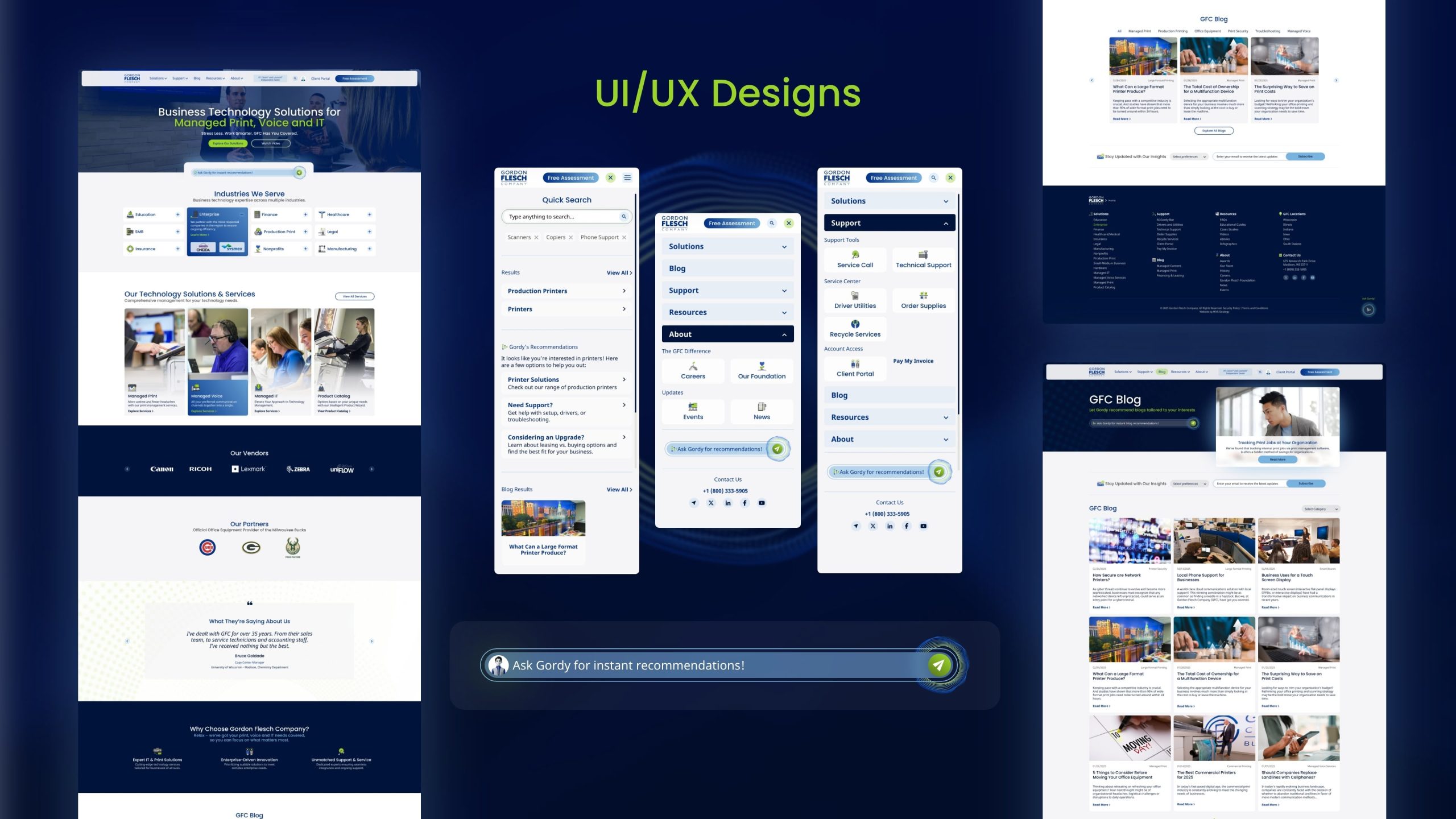
The final high-fidelity UI combined deep functionality with a refreshed, modern aesthetic. Utilizing a dark-blue visual language to communicate enterprise trust and innovation, I standardized the UI Design System, typography, iconography…
Before development handoff, I built interactive prototypes to test the flow logic. These mid-fidelity and high-fidelity designs were tested internally to confirm that the new predictive search, simplified service categories, and contextual AI guidance functioned seamlessly and met user goals.
Impact & Outcomes
The redesign successfully transformed the Gordon Flesch digital experience into a more intuitive, structured, and intelligent platform by implementing the UI Design System and integrating the AI assistant.
Faster Navigation
0%
AI Engagement
0%
Scalable Design
0%
User & Platform Impact
35% reduction in time-to-find: Streamlined the megamenu and introduced predictive search, drastically reducing cognitive load and helping users locate technical services faster.
42% engagement with AI: The contextual integration of the Gordy virtual assistant successfully shifted users toward a self-guided, conversational support model.
Business Impact
Increase in qualified interactions: By placing AI-driven recommendations directly in the user’s path, the platform drove higher quality B2B lead generation.
100% scalable design system delivered: Provided engineering teams with a comprehensive, modular UI kit and interactive prototypes, ensuring rapid and consistent future feature rollouts.